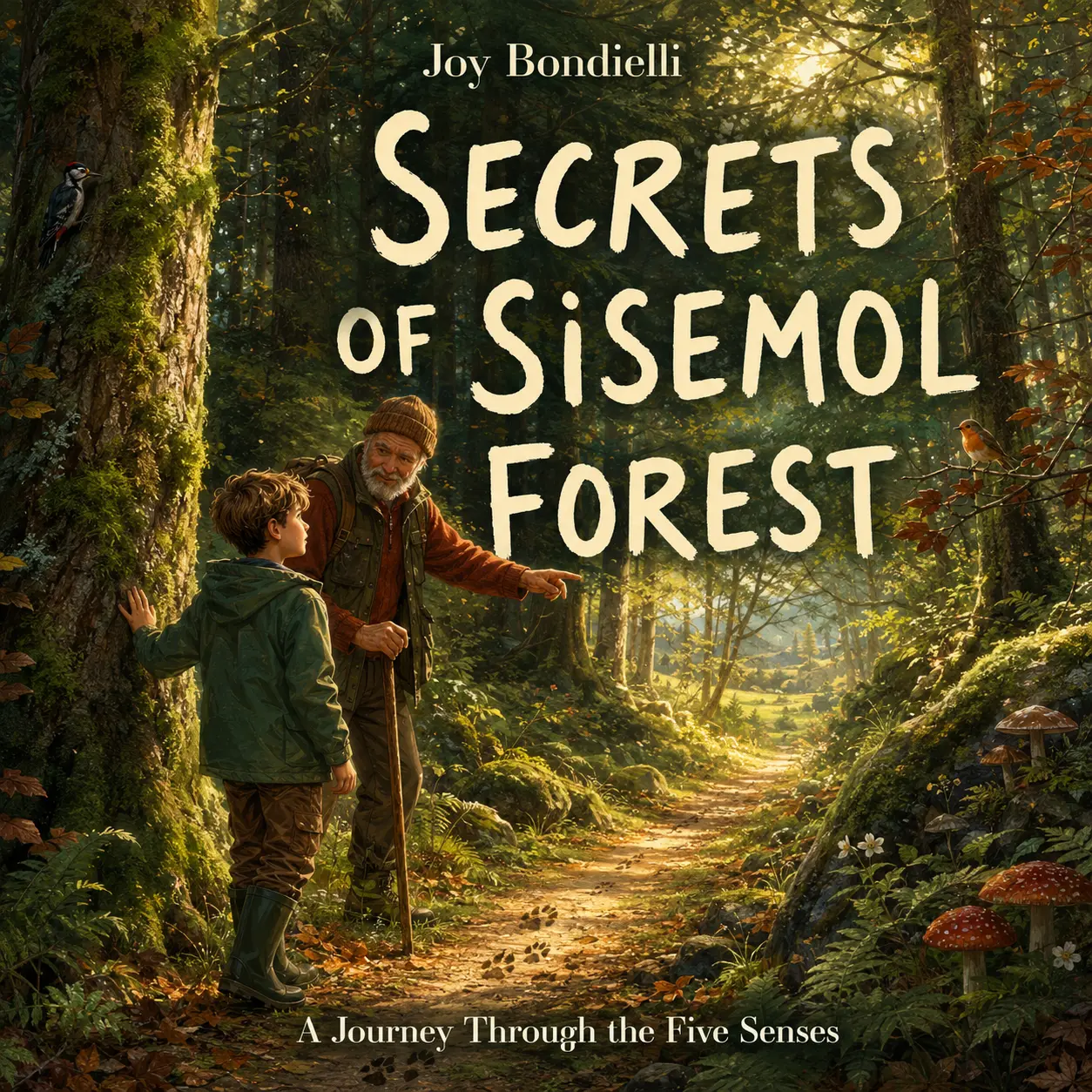
Forests are ideal places for sensory literacy. Sight often dominates daily life, but a woodland asks for listening, texture, smell and awareness of movement. A trusted guide in a story can model patience and respect without taking discovery away from the child.
Try a five-sense forest pause
- Find three greens that are not the same.
- Listen for the nearest and farthest sound.
- Touch only safe surfaces and describe texture.
- Notice one scent without needing to name it.
One question that matters
How can children explore a forest responsibly?
Stay on appropriate paths, keep distance from wildlife, leave plants and fungi where they are, and treat observation—not collecting—as the goal.